
How to Choose a Floor Scrubber: Complete Buying Guide
Learn how to select the right floor scrubber for your facility. Compare walk-behind vs ride-on, battery types, cleaning widths, and key specifications to make an informed decision.
In This Guide
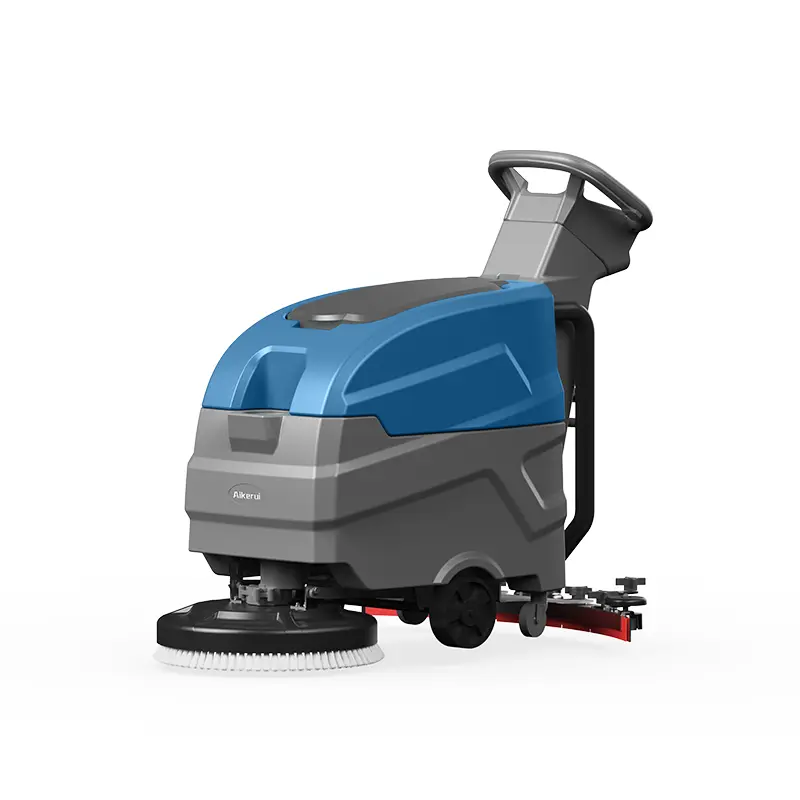
What Type of Floor Scrubber Do You Need?
Floor scrubbers come in two main types: walk-behind and ride-on. Walk-behind scrubbers are ideal for small to medium facilities under 20,000 sq ft, offering maneuverability in tight spaces at a lower cost. Ride-on scrubbers are designed for large industrial spaces over 20,000 sq ft, allowing operators to clean more area in less time with reduced fatigue. For facilities with heavy debris, consider a sweeper-scrubber combination machine that can sweep and scrub in one pass.
- Walk-behind: Best for 5,000–20,000 sq ft spaces, tight aisles, lower budget
- Ride-on: Best for 20,000+ sq ft, high productivity needs, operator comfort
- Sweeper-scrubber: Best for heavy debris environments, construction, warehouses
Key Specifications to Compare
When comparing floor scrubbers, focus on the specifications that directly impact cleaning performance and efficiency. The cleaning width determines how much area you can cover per pass, while the tank sizes affect how long you can clean before needing to refill and empty.
- Cleaning Width: 17–36 inches (walk-behind), 28–48 inches (ride-on)
- Solution Tank: 10–30 gallons determines runtime between refills
- Recovery Tank: Should match solution tank capacity
- Brush Speed: 150–300 RPM affects scrubbing effectiveness
- Battery Runtime: 3–5 hours typical, lithium options available
- Productivity: 20,000–70,000 sq ft/hour depending on model
Battery Type: Lead-Acid vs Lithium
Battery choice significantly affects your total cost of ownership. Lead-acid batteries are cheaper upfront but require regular maintenance and have a shorter lifespan. Lithium batteries cost more initially but offer longer life, no maintenance, faster charging, and lighter weight. For facilities that run multiple shifts, lithium batteries with opportunity charging provide better productivity as they can be charged during breaks without memory effect.
- Lead-Acid: Lower cost, 1–2 year lifespan, requires watering, 8-hour charge time
- Lithium: Higher cost, 3–5 year lifespan, no maintenance, 2–3 hour charge time
- Best for multi-shift: Lithium with opportunity charging capability
Matching the Machine to Your Floor Type
Different floor types require different brush types and scrubber settings. Hard floors like tile, concrete, and epoxy need stiff brushes for effective cleaning. Polished or coated floors require softer brushes or pads to avoid damage. For facilities with multiple floor types, look for machines with adjustable brush pressure and easy pad/brush changeover.
- Concrete/Epoxy: Medium to stiff brushes, high pressure settings
- Tile/Marble: Soft brushes or pads, medium pressure
- Wood/ laminate: Very soft brushes, low pressure, dry immediately
- Rubber/ sports floors: Specialized pads, low moisture
Total Cost of Ownership Considerations
Beyond the purchase price, consider ongoing costs: replacement brushes and squeegees, battery replacement, maintenance parts, and operator training. A cheaper machine may cost more in the long run if it requires frequent repairs or consumes more water and cleaning solution. Factor in a 3–5 year total cost of ownership including parts, service, and consumables.
Why Choose Aikerui Floor Scrubbers?
Aikerui offers a full range of walk-behind and ride-on scrubbers designed for global industrial applications. Our machines feature durable steel frames, reliable motor systems, and easy-to-service components. With CE certification, competitive pricing, and a 1-year warranty, Aikerui provides excellent value for distributors, rental companies, and facility managers worldwide. All machines come with detailed manuals and video support.
Ready to Get Factory-Direct Pricing?
Get a quote within 24 hours. No middlemen — buy direct from the manufacturer and save 30-50%.
About the Author
Mark Xu is Sales Director at Aikerui with 15+ years of experience in industrial floor cleaning equipment. He has helped 2,000+ facilities across 50+ countries source factory-direct cleaning equipment.