
Industrial Floor Scrubber: The Complete 2026 Buyer's Guide
Everything you need to know about industrial floor scrubbers. Compare walk-behind vs ride-on, disc vs roller brush, lead-acid vs lithium. Includes selection checklist, ROI calculator, and industry-specific recommendations.
In This Guide
- What Makes a Floor Scrubber 'Industrial'?
- Decision 1: Walk-Behind vs Ride-On
- Decision 2: Disc Brush vs Roller Brush
- Decision 3: Battery — Lead-Acid vs Lithium
- Decision 4: Cleaning Width and Tank Capacity
- Decision 5: Total Cost of Ownership vs Sticker Price
- Industry-Specific Recommendation Details
- Floor Scrubber ROI Calculator — 4-Step Framework
- Red Flags When Buying Used
- Ready to Choose?
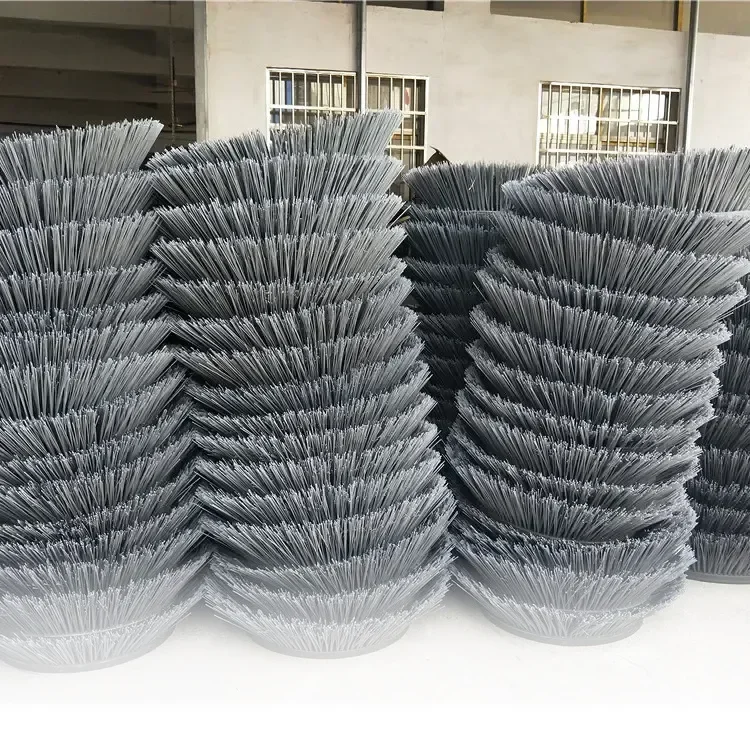
What Makes a Floor Scrubber 'Industrial'?
An industrial floor scrubber is designed for heavy-duty continuous use in demanding environments — factories, warehouses, and manufacturing plants. Unlike commercial scrubbers for retail or office use, industrial machines feature reinforced steel frames, larger tanks, higher brush pressure, and longer runtime. If your facility exceeds 20,000 sq ft or operates multiple shifts, you need an industrial-grade machine.
Decision 1: Walk-Behind vs Ride-On
This is the most important choice. Walk-behind scrubbers are compact, maneuverable, and cost $3,000-12,000 — ideal for facilities under 20,000 sq ft. Ride-on scrubbers cost $9,000-35,000 but clean 2-3x more area per hour. For any facility over 30,000 sq ft, a ride-on machine pays for itself in labor savings within 12-18 months.
- Walk-behind: Best for <20,000 sq ft, narrow aisles, multi-floor, lower budget
- Ride-on: Best for >30,000 sq ft, open floor plans, daily 4+ hour cleaning
- Full comparison: /guides/walk-behind-vs-ride-on-scrubber
Decision 2: Disc Brush vs Roller Brush
Disc brushes scrub with flat rotation — best for smooth floors like sealed concrete and epoxy. Roller brushes spin vertically and penetrate grout lines — best for textured factory floors. Disc brushes cost $45-75 to replace; roller brushes cost $80-200 but last longer on rough surfaces.
- Disc brush: Best for smooth floors — supermarkets, hospitals, sealed concrete
- Roller brush: Best for textured floors — factories, tile with grout, safety flooring
- Full comparison: /guides/disc-brush-vs-roller-brush-scrubber
Decision 3: Battery — Lead-Acid vs Lithium
Lead-acid costs $400-800 upfront but needs replacement every 1-3 years with monthly maintenance. Lithium costs $1,200-2,400 upfront but lasts 3-5 years with zero maintenance and charges 3x faster. For single-shift operations, lead-acid works. For multi-shift facilities, lithium's fast charging pays for itself by year 3.
- Lead-acid: Lower upfront, higher maintenance, 8-10hr charge, no opportunity charging
- Lithium: Higher upfront, zero maintenance, 2-3hr charge, opportunity charging
- Full comparison: /guides/lead-acid-vs-lithium-battery-scrubber
Decision 4: Cleaning Width and Tank Capacity
Cleaning width and tank size directly control your cleaning throughput. Match width to aisle layout; match tank to cleaning schedule.
- 17-20 inch (A500BT, T290): Small shops, narrow aisles, ~15,000 sq ft/hr — 10-15 gal tanks, 20-30 min runtime
- 20-28 inch (K500BT, A650T): Medium warehouses, schools, ~25,000 sq ft/hr — 15-25 gal tanks, 30-50 min runtime
- 28-34 inch (K660, A660T): Large warehouses, factories, ~50,000 sq ft/hr — 25-35 gal tanks, 50-70 min runtime
- 34-50 inch (S1250): Logistics centers, airports, ~80,000+ sq ft/hr — 35-50 gal tanks, 70-90 min runtime
- Tank sizing rule: 10 gal = ~20 min. To clean without interruption, match tank to area: (sq ft ÷ cleaning width ÷ speed) + 20% margin
Decision 5: Total Cost of Ownership vs Sticker Price
A $6,000 machine with $2,000/year parts costs more over 5 years ($16,000) than a $10,000 machine with $500/year maintenance ($12,500). Always calculate 5-year TCO.
- Entry-level walk-behind (17-20 in): $3,000-5,000 purchase → 5yr TCO ~$5,500-8,000. ROI in 6-10 months vs manual cleaning.
- Mid-range walk-behind (20-28 in): $5,000-8,000 → 5yr TCO ~$8,000-13,000. ROI in 4-8 months.
- Compact ride-on (28-34 in): $9,000-15,000 → 5yr TCO ~$13,000-22,500. ROI in 8-12 months. Maximum value point for most facilities.
- Full-size ride-on (34-50 in): $15,000-35,000 → 5yr TCO ~$20,000-47,000. ROI in 12-18 months. Only makes sense for 100,000+ sq ft.
- Battery cost hidden in TCO: Lead-acid replacement at year 2 ($500-800). Lithium lasts 5+ years ($0 replacement). For multi-shift → lithium saves $800-1,600.
Industry-Specific Recommendation Details
Each industry has unique cleaning requirements. Here's your cheat sheet with specific Aikerui model matches:
- Warehouse/Distribution: Ride-on disc scrubber, 28-34 inch (K660, A660T), sealed concrete floor, lithium battery for multi-shift operation. Key spec: 60-80 kg brush pressure, 30+ gal tanks. Clean during shift change or at night.
- Manufacturing Plant: Ride-on roller brush or abrasive disc, 28-42 inch (K660 with PPL brush, A660T), oil-resistant squeegee rubber. Key spec: 80-100 kg brush pressure. Requires chemical dosing system for degreasing.
- Food Processing: Walk-behind or compact ride-on with stainless steel frame (K500BT), food-grade wash-down components. Key spec: IP65+ water resistance, HACCP-compliant materials. Floor must dry completely within 5 minutes to prevent slip hazards.
- Automotive Service/Dealership: Heavy-duty ride-on (K660 with abrasive brush), 100 kg brush pressure minimum, oil-resistant everything. Requires: degreasing chemical tank, heavy debris pre-sweep, rapid squeegee blade changes.
- Supermarket/Retail: Compact walk-behind (A500BT, A650T), <65 dB noise level, fast-drying feature for daytime cleaning during open hours. Key spec: maneuverable in tight aisles (35 inch minimum turn radius), quick pad-change system for various floor types.
- Hospital/Healthcare: Walk-behind with HEPA filtration (A650T), <60 dB ultra-quiet, chemical-resistant seals for disinfectant compatibility. Key spec: cordless operation for patient safety, HEPA vacuum for airborne pathogens, low-profile for under-bed cleaning.
- Airport/Convention Center: Full-size ride-on (S1250), 42-50 inch cleaning width, lithium battery mandatory for continuous operation. Key spec: 80,000+ sq ft/hr productivity, 8+ hour runtime, onboard chemical auto-dilution.
- Parking Garage: Ride-on sweeper-scrubber combo, 42-50 inch with heavy debris hopper and dust control system. Key spec: outdoor-capable brush deck, chemical-resistant to road salt and oil, heavy-gauge steel frame for debris impact.
- Cold Storage / Freezer Warehouse: Specialized scrubber with heated solution tank, anti-freeze capable squeegee, and lithium battery rated for -20°C. Key spec: all-weather hydraulic system, non-slip operator platform.
- Pharmaceutical Cleanroom: Small walk-behind (T290), HEPA H14 filtration, stainless steel no-paint construction, ISO Class 5-8 compatible. Key spec: zero particle emission, ESD-safe wheels, fully demountable for autoclave sterilization.
Floor Scrubber ROI Calculator — 4-Step Framework
Use this framework to calculate your actual return on investment. Replace the example numbers with your facility's data:
- Step 1: Calculate Current Labor Cost = (hourly janitor wage × hours spent cleaning/day × 260 working days/yr). Example: $18/hr × 6 hrs/day × 260 = $28,080/yr per cleaner. Two cleaners = $56,160/yr.
- Step 2: Calculate Machine 5-Year Cost = purchase price + (annual parts × 5) + battery replacements. Example K660: $12,000 + ($800 × 5) + $0 (lithium) = $16,000 total. Annualized: $3,200/yr.
- Step 3: Calculate New Labor Cost = old cost ÷ productivity multiplier. Ride-on is typically 2-3x faster than manual mopping or walk-behind. Example: $56,160 ÷ 2.5 = $22,464/yr (one operator with ride-on replaces two moppers).
- Step 4: Annual Savings & Payback = (old labor − new labor) − annualized machine cost. Example: ($56,160 − $22,464) − $3,200 = $30,496/yr saved. Payback period = $12,000 ÷ $30,496 = 4.7 months.
- Estimated ROI across industries: Warehouse 4-7 months | Factory 5-9 months | Supermarket 6-10 months | Hospital 8-14 months | Airport 12-18 months. Add 50% to payback time if switching from existing scrubber (not manual).
Red Flags When Buying Used
Check these deal-breakers before buying any used scrubber:
- Hour meter: 3,000+ hours on ride-on or 1,500+ on walk-behind = expect major repairs
- Battery age: 2+ years lead-acid or 4+ years lithium = budget replacement
- Bent squeegee deck: Machine was driven into obstacles — check frame alignment
- Rust in recovery tank: Machine stored wet — vacuum motor likely compromised
- Missing service records: Assume the worst
Ready to Choose?
Browse our factory-direct walk-behind and ride-on scrubbers. Send us your facility details for a personalized recommendation and quote within 24 hours.
Ready to Get Factory-Direct Pricing?
Get a quote within 24 hours. No middlemen — buy direct from the manufacturer and save 30-50%.
About the Author
Mark Xu is Sales Director at Aikerui with 15+ years of experience in industrial floor cleaning equipment. He has helped 2,000+ facilities across 50+ countries source factory-direct cleaning equipment.